

to delete something here, you have to write more
Facebook, 2008. The inbox has gotten too big to search. Two engineers, Avinash Lakshman and Prashant Malik, build a new kind of database for it, one that spreads every message across many machines so no single disk ever has to hold the whole thing. In July the company gives the code away. They name it Cassandra, after the Trojan princess who was given true sight and then cursed so that nobody would believe a word she said.
The joke inside the name is that Cassandra is the database that can't make all of its copies believe anything. Every record lives on several machines at once, on purpose. If one goes dark, the others answer. That's the whole point, and it's also the problem, because now when you erase a message from one copy, a copy that was asleep at the time will wake up still holding it and politely hand it back.
So the manual says it plainly. Cassandra treats a deletion as an insertion. To delete something, it writes a small, dated marker in the spot where the data was. The engineers call that marker a tombstone.
The tombstone has a job. It has to stand there long enough for every copy to hear the news. By default that's ten days, a setting called gc_grace_seconds, 864,000 of them. Only after the grace period does the tombstone itself get swept away. If a machine sleeps through all ten, the documentation says, it comes back holding the pre-delete version and announces it to the others as if nothing happened. The docs have a word for the thing that walks back in. They call it a zombie.
okay that's a dead subject you bring it up that's a zombie
You've run this database. You blocked the number. You archived the thread, which did not delete anything; it wrote a marker that says this is finished and moved it below the fold. The photo went to Recently Deleted, where Apple keeps it for thirty days in case you were wrong. Every one of those was a write. Deleting someone, it turns out, means adding a line to their file.
And the replicas. Your friends are the replicas. Your mother is a replica with a long backup window. The one who was off the grid for a month at a wedding in another time zone comes back and asks, warmly, how the two of you are doing. That's the zombie, and it isn't their fault. They never got the tombstone.
The thing about a ten-day grace period is that it's a bet on how long people stay offline. Set it too short and zombies come back forever. Set it too long and the markers pile up, and the system slows down reading past all the things it's been told are gone. There is no setting that makes the dead stay buried without cost. The engineers chose ten days because it's long enough for most outages and short enough to live with.
You don't get to choose. Your grace period is however long it takes the last person who knew you as a couple to hear. It can be a decade. A college roommate at a reunion, three drinks in, asks after someone by name, and there's the old record, intact, served with confidence from a copy that was never updated.
Look at what a tombstone actually is, though. It's the newest thing in the row. In a system that keeps every version and sorts by date, the marker that says "deleted" sits on top, and when anyone asks, the marker is what they get. The last message in a thread you ended is the most recent thing you ever said to that person. "Read, 11:48 PM" is an epitaph. So is the silence after it. That's the entry everyone will read first, because it's on top.
Engineers could have called it a shredder. They called it a tombstone, because a tombstone marks a thing and then keeps standing there, with a date on it, in a place you can visit. Facebook needed a way to say "this is over" to a thousand machines that couldn't all be reached at once, and the honest answer was that you can't make it gone. You can only write "gone" and wait.
You can't reach every replica. Some of them will always have been offline. The only move the system allows is the one it was built on: keep writing newer things, and let the old versions sink.
Deleting someone is the newest thing you wrote about them.
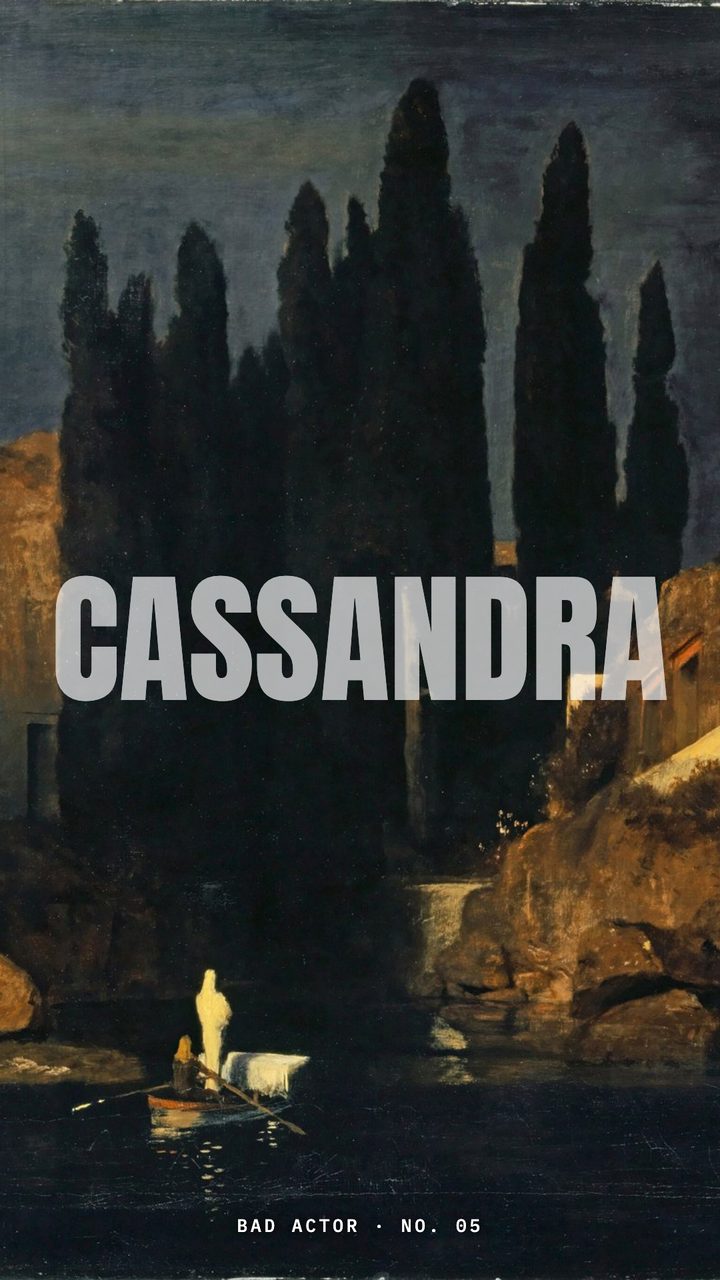
The painting: Arnold Böcklin, Isle of the Dead (1880), Kunstmuseum Basel. Public domain.
Sources